
Staying current in medical billing and coding isn't optional. ICD-10-CM codes update every October 1, CPT codes update every January 1, and payer rules change continuously. AAPC requires 36 CEUs every 2 years for CPC holders. AHIMA has similar requirements by credential. The good news: free and low-cost CEU sources are widely available, and your investment in ongoing education directly correlates with higher earnings.
- 1.AAPC requires 36 CEUs every 2 years for the CPC. At least 24 must be related to your primary credential area.
- 2.AHIMA recertification requirements vary by credential but follow a similar ongoing education model.
- 3.ICD-10-CM codes update every October 1; CPT codes update every January 1. Using outdated codes results in automatic claim denials.
- 4.Free CEU sources include AAPC local chapter meetings, CMS Medicare Learning Network webinars, payer-hosted training, and AAPC Healthcare Business Monthly articles.
- 5.Investing in continuing education pays off. Coders with 3+ certifications average $81,227/yr compared to $66,979 for single-credential holders (AAPC 2025).
36
CEUs Required per 2-Year Cycle (AAPC CPC)
Oct 1
Annual ICD-10-CM Code Update
Jan 1
Annual CPT Code Update
$81,227
Avg Salary, 3+ Certifications
Why Staying Current in Medical Billing and Coding Matters
Medical billing and coding isn't a "learn it once" profession. The code sets you use change every year. Payer rules shift quarterly or more often. New regulations, compliance requirements, and technology tools constantly reshape how the work gets done.
If you stop learning, your coding accuracy drops. Outdated codes get denied automatically. Unfamiliarity with new guidelines leads to undercoding, overcoding, or common errors that cost your employer revenue and put your job at risk.
There's also a direct financial incentive. Coders who invest in continuing education and additional certifications earn significantly more. AAPC's 2025 Salary Survey shows that coders with 3+ credentials average $81,227/yr, compared to $66,979 for single-credential holders and $55,721 for non-certified professionals. Each credential you add expands your job market and salary ceiling.
Source: AAPC 2025 Salary Survey
CEU Requirements by Organization
AAPC CEU Requirements. CPC holders need 36 CEUs every 2 years. At least 24 of those must be in your primary credential area (coding for CPC holders). The remaining 12 can be in any AAPC-approved topic. CEUs can come from conferences, workshops, local chapter meetings, online courses, journal articles with quizzes, and self-study activities.
If you hold multiple AAPC credentials, you need CEUs for each one, but there's overlap. CEUs that apply to multiple credential areas can count toward more than one certification. Check AAPC's CEU tracker (available in your member portal) to see exactly where you stand.
AHIMA CEU Requirements. AHIMA uses a recertification cycle that varies by credential. CCA holders and CCS holders both have ongoing education requirements. AHIMA tracks these through their Professional Development portal. The specific number of credits and timeframe depends on your credential level and when you earned it.
What happens if you don't complete your CEUs? Your certification lapses. With AAPC, you can apply for a grace period, but your credential shows as inactive until you complete the requirements. A lapsed certification can affect your employment, especially for remote positions where employers verify credentials regularly.
Annual Code Updates You Need to Track
Two major code update cycles happen every year, and missing either one means immediate claim denials.
ICD-10-CM: October 1. CMS releases new, revised, and deleted ICD-10-CM diagnosis codes effective October 1 each year. Recent updates have added hundreds of new codes annually. CMS publishes the official update files and coding guidelines on its website months before the effective date, giving you time to review changes relevant to your specialty.
CPT: January 1. The AMA updates the CPT code set effective January 1 each year. Updates include new procedure codes, revised descriptions, and deleted codes. The E/M coding guidelines have seen significant revisions in recent years. The AMA publishes a CPT code change summary that highlights the most significant additions and modifications.
HCPCS Level II: Quarterly. CMS updates HCPCS Level II codes quarterly (January, April, July, October). These updates affect drugs, supplies, DME, and certain services. If you work in a specialty that bills significant HCPCS codes, tracking these quarterly releases is essential.
Payer-specific rules: Ongoing. Medicare, Medicaid, and commercial payers update their billing policies, LCD/NCD coverage determinations, and prior authorization requirements throughout the year. CMS publishes Medicare transmittals and change requests regularly. Commercial payer updates arrive through provider portals and newsletters.
Source: CMS and AMA update schedules
Free and Low-Cost CEU Sources for Medical Billing and Coding
You don't need to spend a fortune on continuing education. Many high-quality CEU sources are free or included with your membership.
AAPC local chapter meetings. Most chapters meet monthly and offer 1 to 2 CEUs per meeting. Topics cover coding updates, specialty deep-dives, compliance issues, and career development. Attendance is included with your AAPC membership. There are 500+ chapters nationwide.
AAPC Healthcare Business Monthly. AAPC's member magazine includes articles with CEU quizzes. Each issue typically offers 1 to 2 CEUs. This is passive education you can do during lunch or commuting.
CMS Medicare Learning Network (MLN). CMS offers free web-based training on Medicare billing rules, code updates, compliance, and specific clinical topics. MLN courses are available at cms.gov and qualify for CEUs through both AAPC and AHIMA.
Payer-hosted webinars. Medicare Administrative Contractors (MACs), Blue Cross, UnitedHealthcare, and other major payers host free educational webinars on billing guidelines, common denials, and policy changes. These are practical, real-world education that directly improves your daily work.
Free online resources. YouTube channels like Contempo Coding provide free coding walkthroughs. The AAPC forums host coding discussions that deepen your knowledge. See our free resources guide for a full list.
AAPC's annual national conference offers 18+ CEUs over 3-4 days. Registration typically costs $800-$1,200. Networking, workshops, and vendor demos supplement the CEU sessions.
Pre-packaged CEU bundles cover specific topics (E/M coding, surgical coding, compliance). Prices range from $50-$300 depending on credits included.
AHIMA offers online courses covering HIM, coding, data analytics, and compliance. Member pricing applies. Courses range from self-paced modules to instructor-led programs.
Studying for additional certifications (CRC, CIC, COC, CCS) doubles as CEU activity and career advancement. Course costs range from $200-$800 plus exam fees.
Many employers offer in-house coding education, pay for conference attendance, or reimburse CEU costs. Ask your supervisor about professional development budgets.
Building a Continuing Education Plan
Don't wait until month 23 of your 24-month cycle to scramble for CEUs. Build a simple plan that spreads your education throughout the cycle.
Quarterly targets. With 36 CEUs required over 2 years, that's about 4.5 per quarter or roughly 1.5 per month. If you attend one AAPC chapter meeting per month (1-2 CEUs) and read one Healthcare Business Monthly article with a quiz (1 CEU), you're already on pace without spending extra money.
Align education with code updates. Schedule ICD-10-CM update training for August-September (before the October 1 effective date) and CPT update training for November-December (before the January 1 effective date). This turns mandatory code-update preparation into CEU credits.
Track everything in your portal. AAPC and AHIMA both provide online tracking tools. Log your CEUs as you earn them, not at the end of the cycle. Upload certificates of completion immediately. This prevents the panic of trying to reconstruct 2 years of activity from memory.
Consider adding a credential. Studying for an additional certification counts as professional development and results in a credential that boosts your salary and job prospects. If you hold a CPC and want to move toward hospital coding, pursuing the CCS is both education and career advancement.
Source: Calculated from 36 CEUs / 24 months
Your Annual Continuing Education Calendar
January: CPT code update review
Review new, revised, and deleted CPT codes effective Jan 1. Attend your AAPC chapter's code-update workshop. Earns CEUs and keeps you current.
April-June: Mid-year catch-up
Check your CEU tracker. If you're behind pace (should have ~9 CEUs by mid-year in a 2-year cycle), schedule an online course or attend extra chapter meetings.
August-September: ICD-10-CM update prep
Review the ICD-10-CM code changes effective Oct 1. CMS publishes updates months in advance. Focus on changes relevant to your specialty.
October-December: Year-end planning
Complete any remaining CEUs before your cycle deadline. Plan next year's professional development, including any new certifications you want to pursue.
How Continuing Education Drives Career Advancement
Continuing education isn't just about maintaining your current credential. It's how you move up. Every additional certification you earn expands your job market and increases your salary. The path from CPC to specialty credentials (CRC for risk adjustment, CIC for inpatient, CPMA for auditing) is built entirely through continuing education and exam preparation.
Employers notice coders who invest in their own development. During annual reviews and promotion conversations, a track record of completed CEUs, additional credentials, and demonstrated knowledge of current guidelines positions you for raises, leadership roles, and the most desirable remote positions. Staying current isn't just a requirement. It's your primary career growth strategy.
Frequently Asked Questions
Latest Articles

Medical Billing and Coding Industry Trends 2026
AI-assisted coding, value-based care, and remote work are reshaping the medical coding profession.
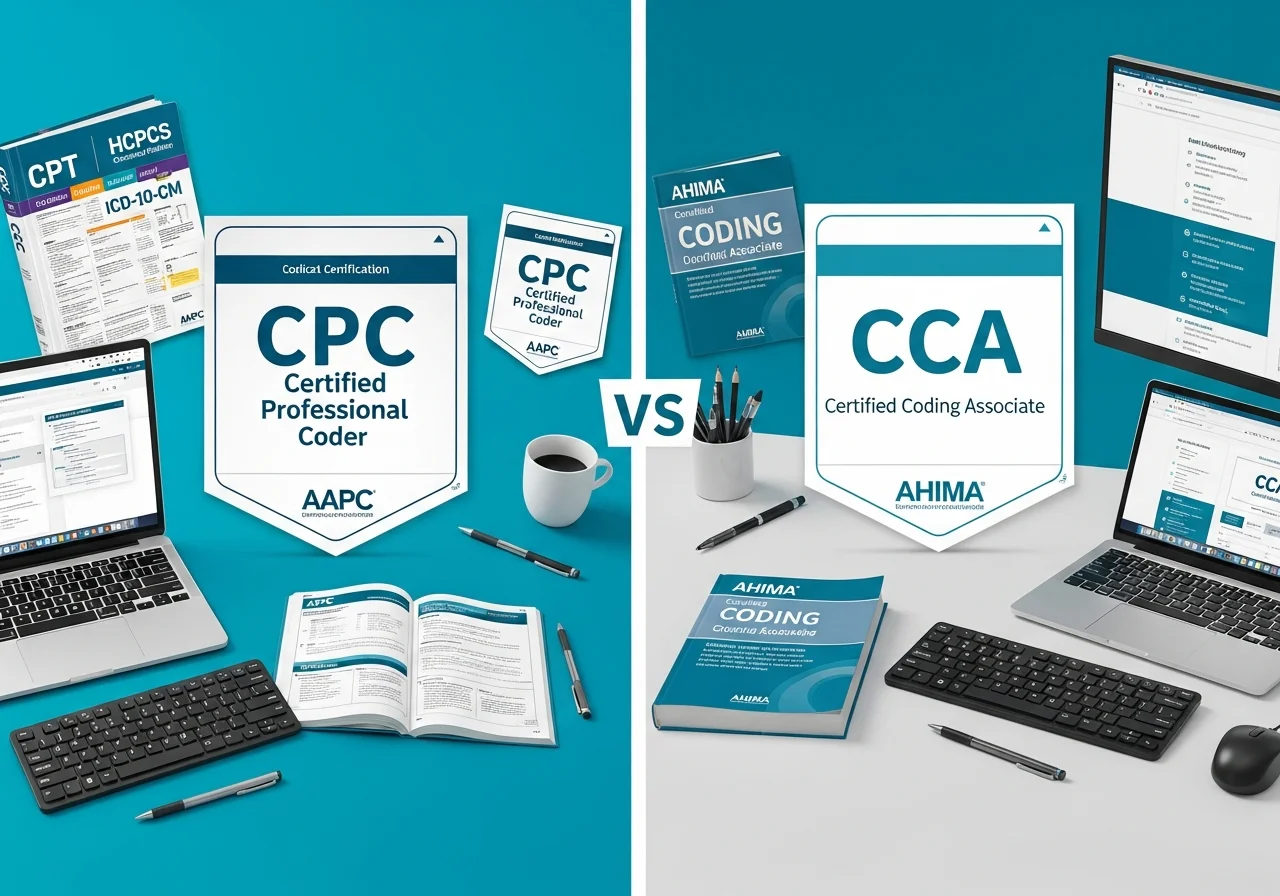
CPC vs CCA: Which Certification?
Comparing AAPC and AHIMA entry-level certifications: cost, difficulty, employer preference, and career impact.

Can AI Replace Medical Coders?
What automation means for medical coders: which tasks are changing and which skills remain essential.

Angela R.
Medical Billing & Coding Specialist | Consultant
Angela worked as a medical billing and coding specialist for multiple chiropractors and orthopedic surgeons. After years in the field, she started her own medical billing and coding consulting company, working with numerous clients throughout Southern California. She brings firsthand industry experience to every article on this site.